Commercial Waste Removal Lime Garden — Recycling & Sustainability
Our approach to a greener, more efficient commercial waste removal service in Lime Garden focuses on creating an eco-friendly waste disposal area and a resilient, long-term sustainable rubbish area model for local businesses. This page outlines our recycling percentage target, the transfer stations we use, charity partnerships that keep reusable items in circulation, and our commitment to a low-carbon van fleet. We align our operations with the borough's approach to waste separation and support local circular-economy initiatives.We set an ambitious recycling percentage target to drive continuous improvement: a staged goal of 70% recycling of collected commercial waste by 2028, rising from an immediate operational target of 60% within the next 18 months. This target covers segregated dry recyclables, food and organic waste streams, and minimisation of residual waste sent to landfill. Achieving this requires robust segregation at source, partnership with local transfer stations and materials recovery facilities, and ongoing staff and client engagement.
 To reach these targets we coordinate with multiple transfer stations and borough waste hubs to ensure material flows are optimised. Our regular routes deliver separated loads to the Lime Garden Transfer Station and neighbouring borough transfer hubs, and where appropriate to specialised facilities for glass, plasterboard and bulky construction waste. Following the borough's approach to waste separation, we encourage tenants and commercial tenants to adopt clear streams for paper and cardboard, glass, plastics and organic waste, making on-site separation easier and diversion rates higher.
Practical recycling activities and material flows
Our operational model emphasises pragmatic collection and value recovery. Core recycling activities relevant to Lime Garden businesses include:- Paper & cardboard: Consolidated baling and direct transfer to local mills for remanufacture.
- Mixed glass: Sorted, crushed and routed to glass processors for cullet production.
- Plastics & packaging: Sorted by polymer where possible; soft plastics channelled to specialist re-processors.
- Food & green waste: Collected in sealed bins and delivered to anaerobic digestion or composting facilities in partnership with borough organics programmes.
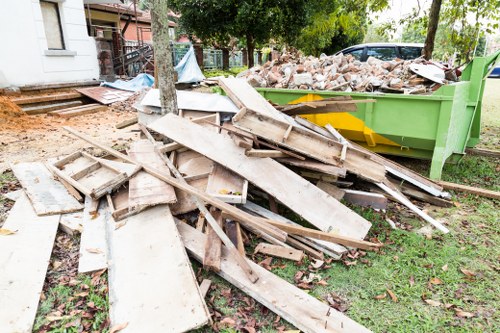
- Construction & bulky waste: Segregation on collection, with concrete, metal and timber recycled or reused where viable.
These activities are complemented by on-site audits and waste stream mapping to identify quick wins and longer-term process changes. We recommend streamlining waste separation into simple colour-coded streams that align with the local borough councils' guidance, which increases participation and reduces contamination.
Partnerships with charities and social enterprises
We maintain active partnerships with local charities, community reuse centres and social enterprises to redirect serviceable items away from disposal. Donations and redistribution channels include: - Furniture and fixtures suitable for reuse are offered to local housing charities and community projects; textiles and uniforms are steered to local collection partners; working IT equipment is evaluated and refurbished by social enterprises for redistribution to schools and community centres. These partnerships not only reduce waste but also create social value—helping to close the loop and extend product lifecycles.
Our donation process includes rigorous assessment and documentation so that items meet the acceptance criteria of partner charities. When materials cannot be reused, we work with materials recovery facilities to recover value through recycling wherever possible.
Low-carbon delivery and fleet strategy
We operate a low-emission fleet with a mix of electric vans and hybrid vehicles to minimise carbon impact on collection routes. Route optimisation software reduces unnecessary mileage, and scheduled consolidation points at the Lime Garden transfer hub reduce duplicate collections in dense commercial areas. Our fleet policy includes regular maintenance, driver eco-training and investment in charging infrastructure to support continued expansion of EV operations.In addition to vehicle choices, we deploy smaller, efficient collection units where streets are narrow and consolidation points where safe, reducing noise and emissions in business districts. These decisions feed directly into our ability to claim and demonstrate lower carbon intensity per tonne of waste handled.
 Our environmental management system tracks key performance indicators — recycling rates, carbon emissions per route, contamination rates and tonnes redirected to reuse or charity. Regular reporting enables us and our commercial clients to measure progress against the 70% recycling target and other sustainability commitments.

Working with the borough and local business community
We actively collaborate with borough waste teams, business improvement districts and neighbouring councils to standardise waste separation practices across the area. Alignment with borough schemes makes it easier for businesses to comply and for service providers to route materials to the correct processing facilities, increasing overall recovery rates and supporting a sustainable rubbish area across Lime Garden.Key elements of our community collaboration include regular operational briefings, participation in borough-led waste reduction campaigns, and shared investment programs for communal recycling infrastructure in multi-tenant commercial properties.
Conclusion: Our vision for Commercial Waste Removal Lime Garden is a resilient, circular, and low-carbon system that prioritises an eco-friendly waste disposal area and an effective sustainable rubbish area for businesses. By combining clear recycling targets, strategic use of transfer stations, meaningful charity partnerships and a low-carbon van fleet, we help commercial customers reduce environmental impact and contribute to a cleaner Lime Garden for everyone.